


-

- idd cologne inspiration
-
Articles
Is everyone a curator?
Macro-Trend No. 1: Curated Living in Exhibition Form
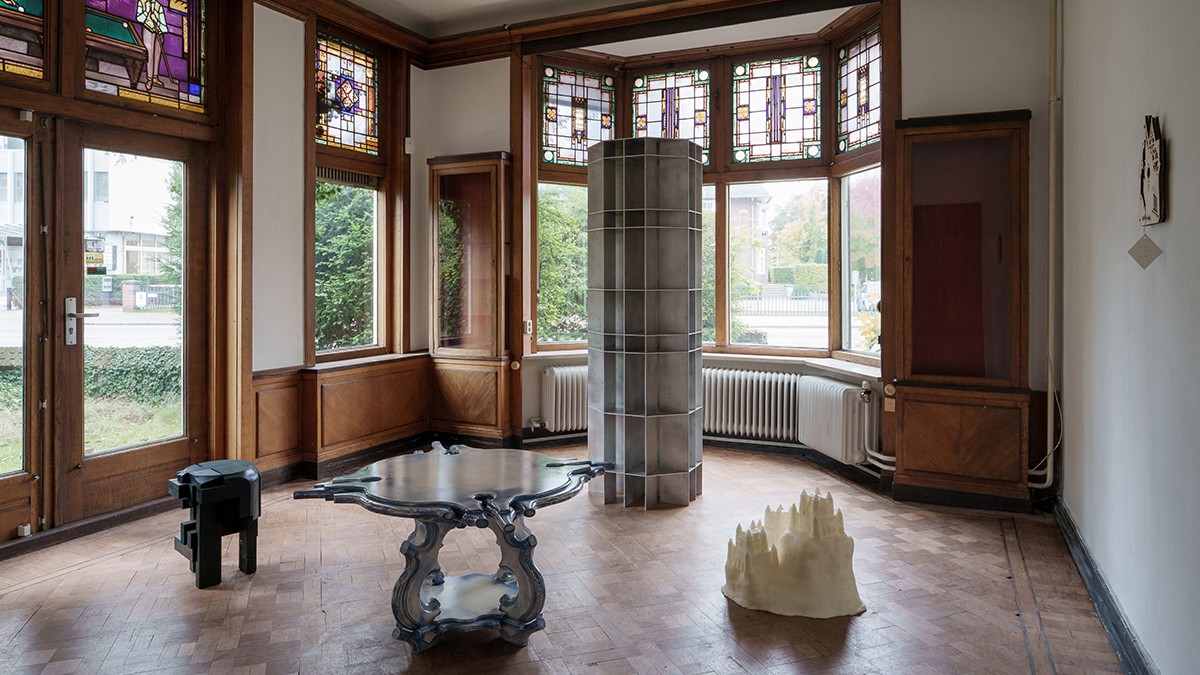
The exhibition “The Boundaries of Sight”, curated by Teo Rhe, Sheyang Li and Jaehyun Byun. Photo: NAMSEUNGROK
One of the major movements shaping the design world in recent years is the rise of so-called collectibles: furniture and interior objects created by studios and designers in extremely small batches or as one-off pieces. These items are often produced directly by the designers themselves, without the involvement of large manufacturers – more akin to prototypes or exclusive craft pieces
Because of this highly specialised production, collectible design tends to be more playful, experimental, intricate and unapologetically individual than conventional furniture. This in turn calls for new ways of presenting such pieces, which may explain why they are frequently shown in group exhibitions. When placed together, they create entirely new contexts: the traditional white cube becomes a living or working environment in which the objects engage in a shared dialogue. One example: The exhibition “The Boundaries of Sight”, curated by Teo Rhe, Sheyang Li and Jaehyun Byun.

Left: “Soft Ply Table Lamp” by Sheyang Li; right: „Surfaced Bench“ by Sho Ota. Photo: Pim Top
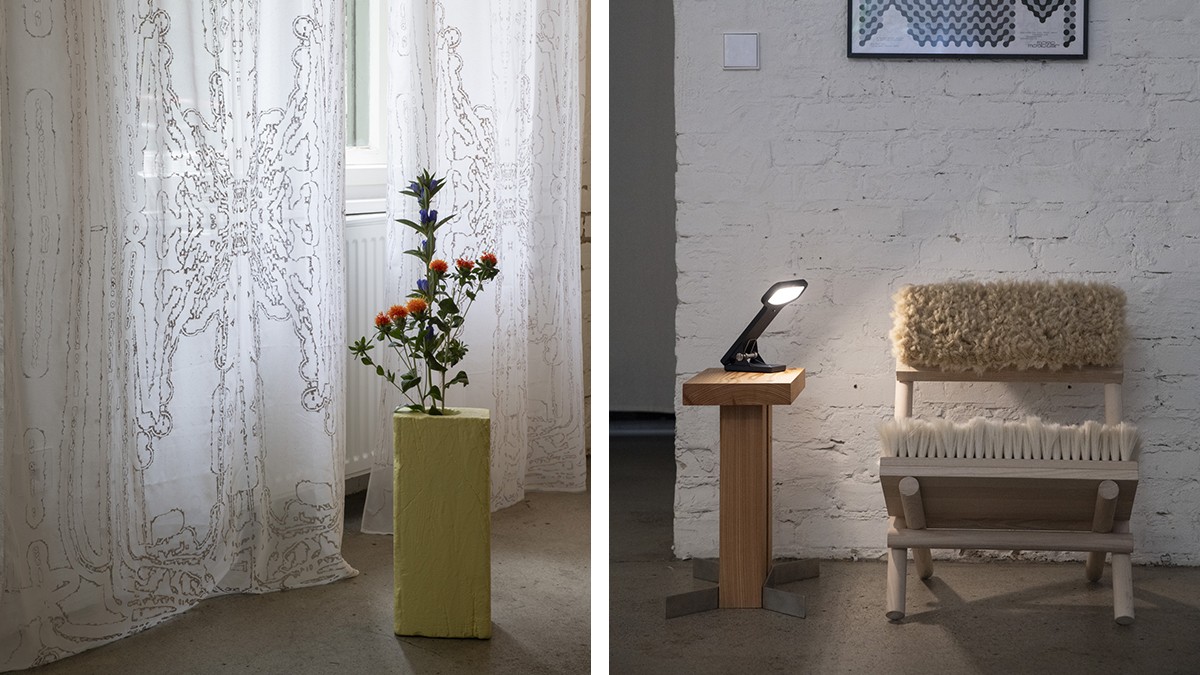
In the exhibition „40 m²", 40 designers presented 38 objects of their own creation. Some were highly practical — such as the clip-on light Aden by Maxine Granzin — while others ventured into the surreal, like the Broom Chair by StudioŒ. Photos: Gina Bolle
The tone became a little more practical — and firmly rooted in product and industrial design — in the exhibition „40 m²“, where 40 designers presented 38 objects. Among them was the Broom Chair by StudioŒ from Berlin, a piece that no doubt left some visitors wondering about its comfort.
Designer Justus Hilfenhaus curated this collection of objects that never made it into serial production and therefore remain eternal prototypes. The exhibition aimed to highlight precisely the potential that emerges within this in-between space.
Macro-Trend No. 3: Curated Third Spaces That Feel Like Home
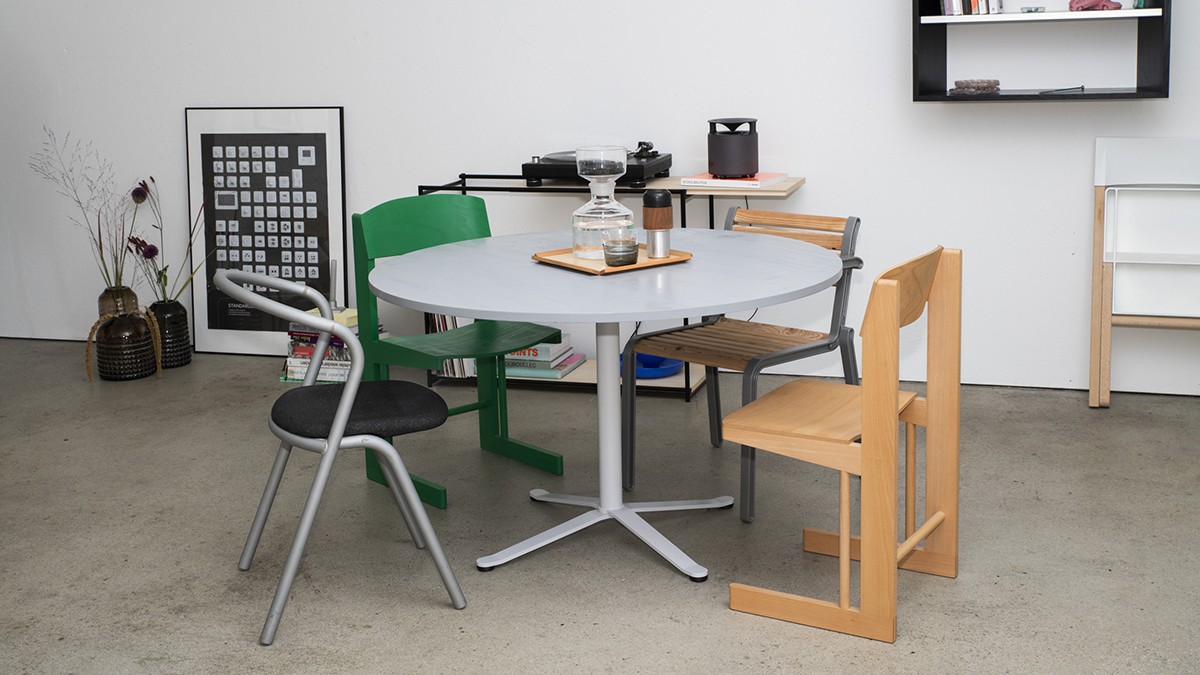
Exhibition view 40 m² . Left: Apero Chair by GECKELER MICHELS, AFC Chair by Hahn CuestaWolf, BT-1 Table by Till Seegräber and Justus Hilfenhaus. Photo: Gina Bolle
On closer inspection, collectible exhibitions often offer a subtly humorous commentary on how we live, both imitating and exaggerating our domestic environments. This was also the case in „Near, Far, Wherever You Go“, curated by Bureau Fomo (Hanna Gassner and Christoph Wimmer-Ruelland) from Vienna: a dystopian take on a day in the home office, where a smoking laptop slowly smoulders in a corner, surrounded by idiosyncratic pieces of office furniture.

Exhibition View “Near, Far, Wherever You Go”, curated by Bureau Fomo. Left: flower arrangement by Alma Bektas, light by Flora Lechner, object by Christoph Wimmer-Ruelland, chair by Jun Fujisaku. Right: loungechair by Studio Kuhlmann, installation by Xenia Lesniewski. Photos: Bureau Fomo
Macro-Trend No. 2: Curated Creative Spaces
Just outside Berlin, tucked away in the Brandenburg countryside, Flussbad is emerging as a place where living, learning, dining and artistic practice come together as an integrated whole. At the heart of the project lies the Reethaus, designed by Austrian architect Monika Gogl. Stylistically, the building sits somewhere between a traditional North Sea thatched house, a brutalist concrete chapel and a Buddhist monastery. Gogl describes it as an homage to ancient temples, caves and other natural places of retreat.

Calm, elegant, brutalist: the Reethaus was designed by Austrian architect Monika Gogl. Left photo: Massimiliano Corteselli. Right photo: Clemens Poloczek
The Reethaus describes itself as a “space for radical presence.” Beneath its handcrafted thatched roof, raw concrete meets meditative silence, complemented by a 360-degree sound system and a ceiling opening that connects the room to the sky. Every last Sunday of the month, the space hosts experimental sound performances.
Flussbad exemplifies a new generation of curated creative spaces – places that are not merely designed, but thoughtfully composed. Much like in private homes, where the deliberate selection of objects is increasingly seen as a form of curation, here too functionality takes a back seat. Architecture becomes a mindset: a carefully arranged environment that brings together aesthetic experience, mindfulness, and community.
Macro-Trend No. 3: Curated Third Spaces That Feel Like Home

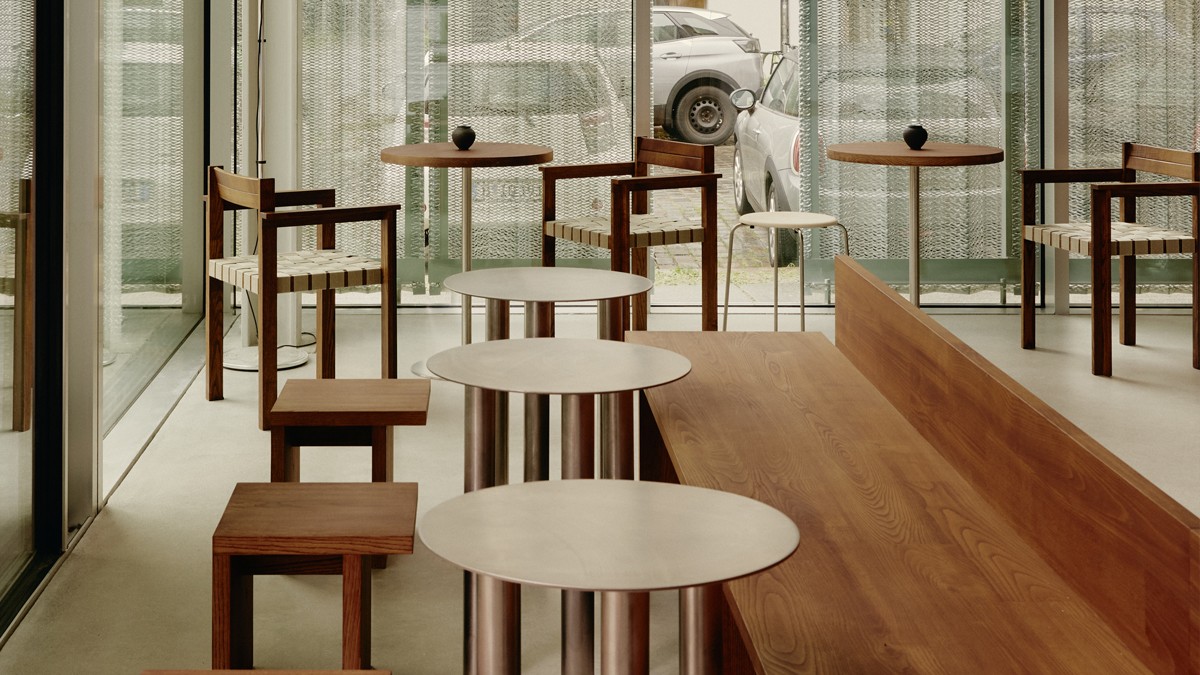
Acid P-Berg in Berlin, a coffee spot with a homely vibe, designed by the Madrid-based studio Plantea. Photos: Daniel Farò
Cafés are often referred to as third places – spaces between work and home where people spend time, meet others, or simply sit in peace. To fulfil this role, design plays a crucial part: A café must not only be functional, but also create atmosphere.
In recent years, the expectations around café interiors have shifted noticeably. With the Instagramification of everyday life , interior design has become a central part of café culture – the ambience now often matters as much as the coffee itself. What’s new, however, is that many cafés are increasingly designed to feel like living spaces rather than traditional hospitality venues. Instead of the clean, minimal “gastro look,” soft materials, warm colours and carefully curated objects dominate, creating a sense of home.
One example is Acid P-Berg in Berlin, designed by Madrid-based studio Plantea. Here, minimalist design meets homely touches – a space that feels like a perfectly styled living room at a friend’s house. Such places show how the line between private and public space is increasingly blurred, and how interior design is becoming a curatorial practice that shapes our everyday lives.
Keen to dive deeper into curated interiors? Find further inspiration in the idd cologne inspiration archive.
Author
the thing author

