-

- idd cologne inspiration
-
Articles
Maybe AI can design your home better than you can
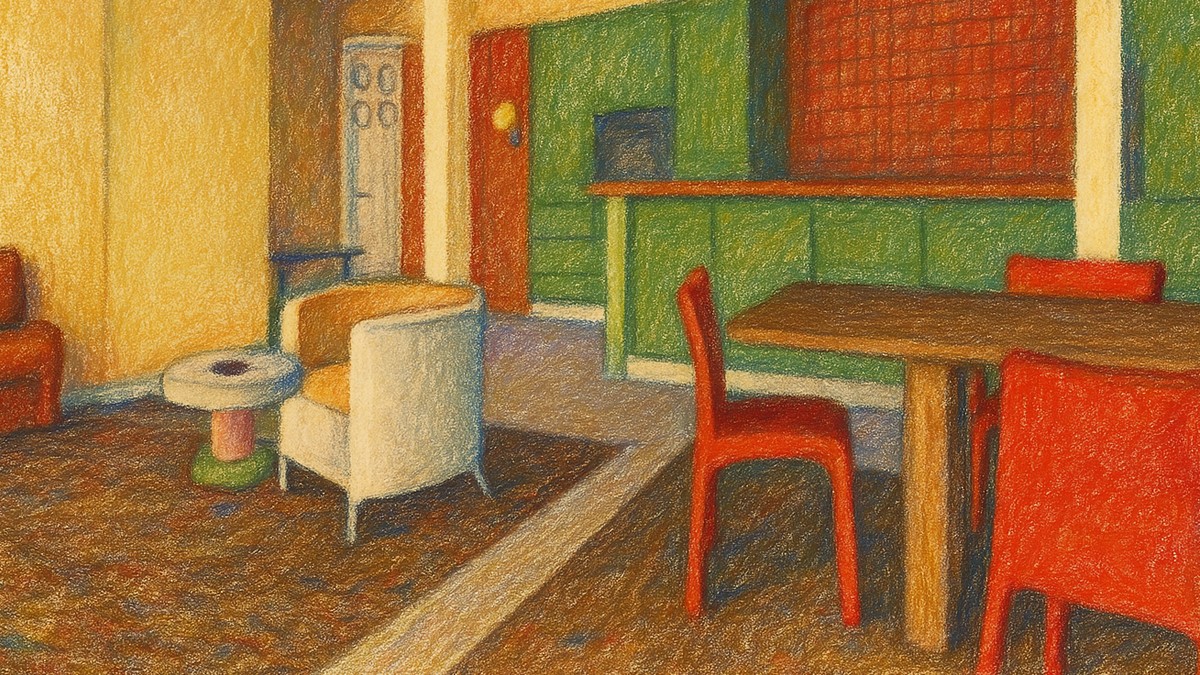
AI can also support the design of private interiors (“Which wall colour suits my living room? What flooring should I choose?”). But it has long since become part of many processes in the professional furniture and interior design industry as well. Join us for a brief tour through the field: we’ve gathered our own insights and spoken with furniture manufacturers and independent architects to explore how AI is shaping the industry today.
It Listens and It Doesn’t Judge: The Chatbot as a Style Assistant
Germans aren’t exactly known for their innate sense of style. All the more useful, then, are digital tools that can answer even the trickiest interior questions: Do I need a different wall colour? How should I use lighting? Which flooring works best? A member of the idd cologne inspiration editorial team recently put this to the test during a renovation project. We asked a chatbot to simulate a room with different flooring options and wall colours based on a photo.
Today, AI tools like these make it possible to alter, enhance or completely redesign spaces without any Photoshop skills – a quick and accessible way to explore initial ideas. Yet the results often feel disappointingly flat, with colours that don’t quite ring true. In the end, there’s still no real substitute for working with mood boards and physical material samples.
A Matter of Taste: AI in Kitchen Studios
Kitchen brands and studios are increasingly turning to 3D and AI-powered tools – sometimes even incorporating augmented reality (AR). This is likely because, for many customers, the level of abstraction involved in planning a kitchen can be quite high given its complexity. On their websites, manufacturers now allow users to simulate initial designs from the comfort of their own homes and visually test out ideas.
We tried a number of these tools ourselves and can say: the results are, at best, mixed. They’re useful for getting a first impression, but when it comes to detailed planning, real expertise is still (thankfully) essential.
One can’t help but wonder whether these applications exist more because they’re on trend than because they truly deliver. The results often feel overly polished and artificial – almost as if you’ve landed in one of Elon Musk’s imagined Mars colonies. Coincidence?
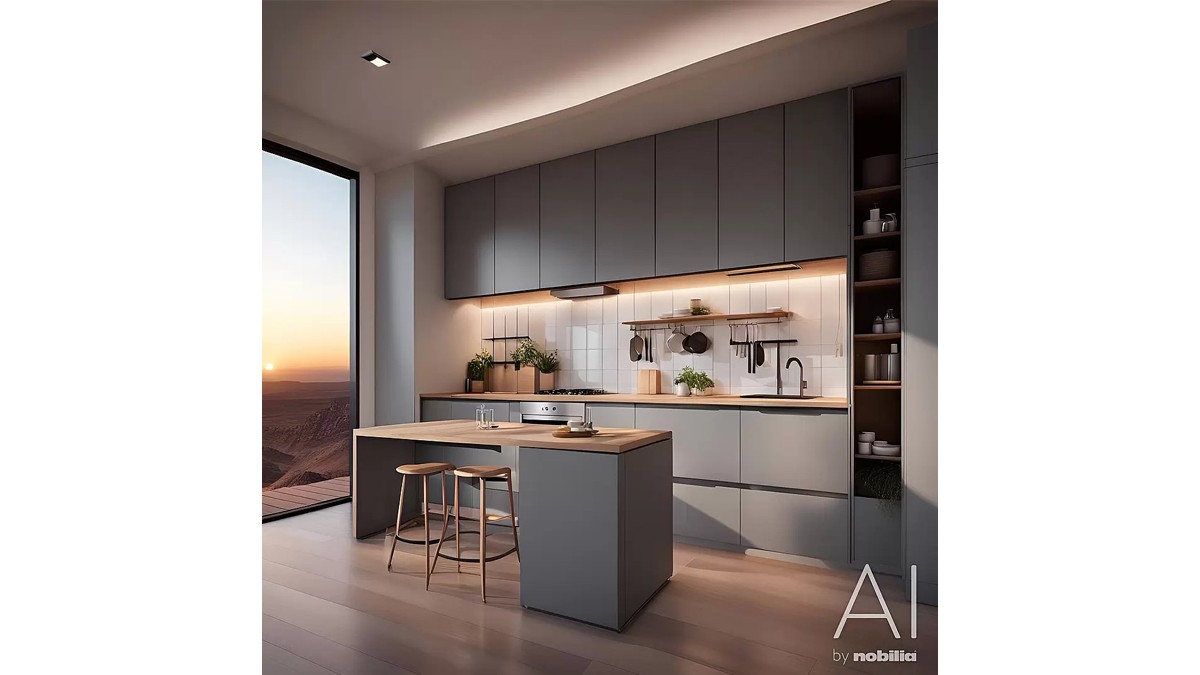
This image was created by the idd cologne inspiration team using Nobilia’s AI kitchen planner.
The manufacturer Küchenstudio Wendt advocates a mindful approach to AI on its website, combining digital tools with personal consultation: “A kitchen is not an off-the-shelf product. Only the combination of modern technology and genuine expert advice leads to results that are both functional and emotionally compelling.”
Between Simulation and Reality: AI in Interior Design Marketing
In recent years, manufacturers have increasingly turned to 3D-modelled interiors. These are faster, more flexible, and far more efficient. One common approach is the use of digitally rendered cut-outs placed within artificial spaces. At the same time, more experimental and artistic projects are emerging in this field – such as the digital works of Andrés Reisinge r or the Dreamspaces Apartment by Isabelle Angèle, which translates real collectible pieces into fully virtual environments. But this practice is evolving as AI is beginning to reshape traditional 3D visualisation.
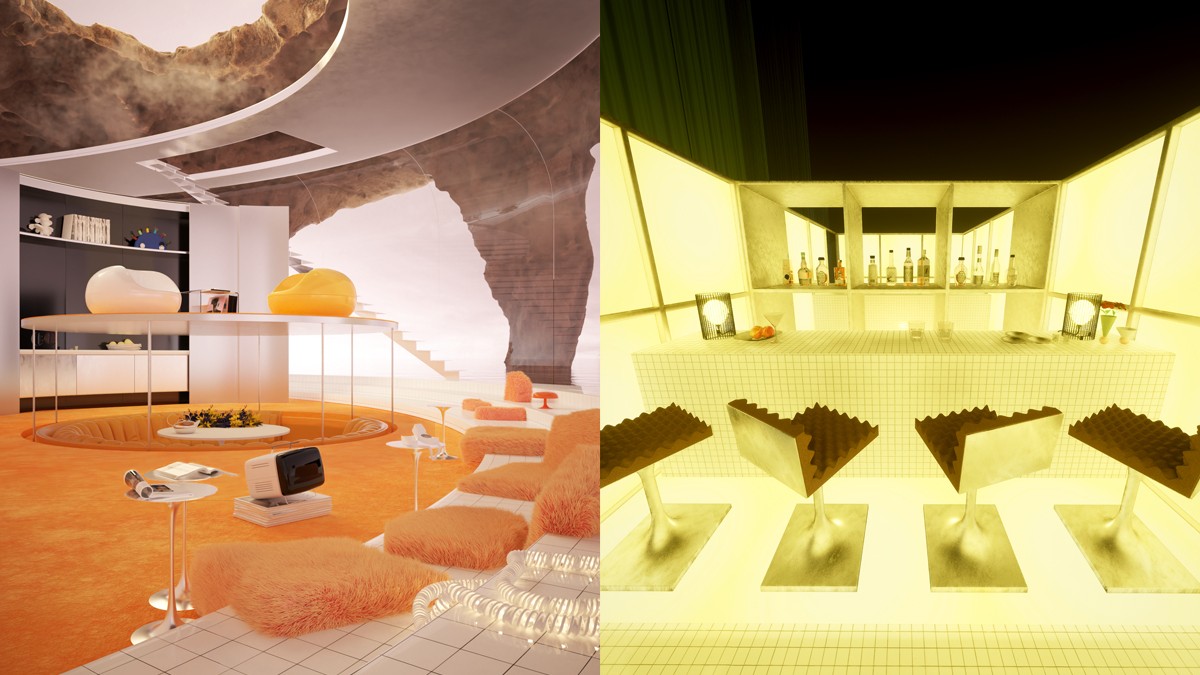
“L’Orangerie” (left) and “Palladium” (right) are two virtual apartments featuring existing design pieces, curated by Isabelle Angèle and brought to life in 3D by artists Odd in Shape and Joe Mortell.
Christoph Steiger, founder of the Berlin-based label Objekte unserer Tage, describes this shift as follows: “A few years ago, we created our interiors entirely in 3D. Today, many of our mood images are produced as AI co-creations.” According to Steiger, this has fundamentally changed the way his company works: “We gain speed and scalability, and can stage large, atmospherically rich spaces more quickly and convincingly. At the same time, it presents a new challenge: defining our own visual DNA with clarity and consistency. The more powerful the tool, the more distinct the creative signature behind it needs to be.”
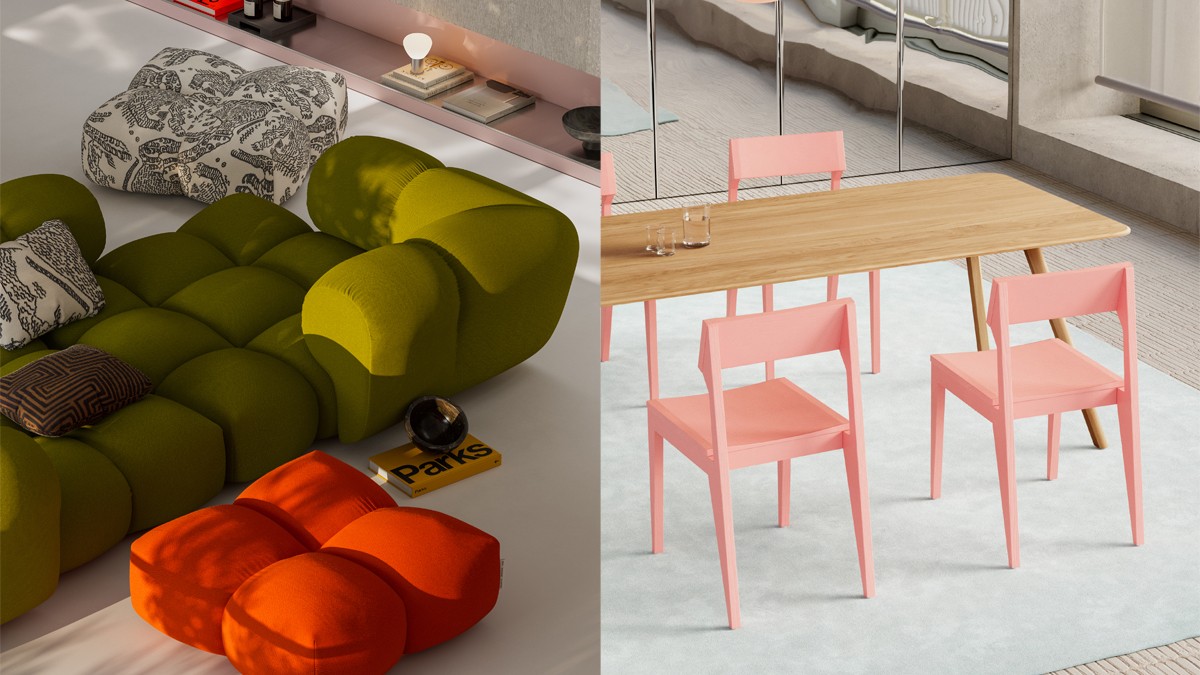
Digitally rendered interiors by the Berlin label OUT – Objekte unserer Tage.
What becomes clear in conversation with Steiger is that AI is more than just a tool – it is reshaping the very conditions under which design takes place. Processes are accelerating, and images are easier to reproduce than ever before. At the same time, however, maintaining a distinct visual identity is becoming more challenging.
The key question remains: how does our understanding of furniture and space change when we increasingly encounter them only through artificially generated images? When the home exists first as a simulation – before it ever becomes reality?
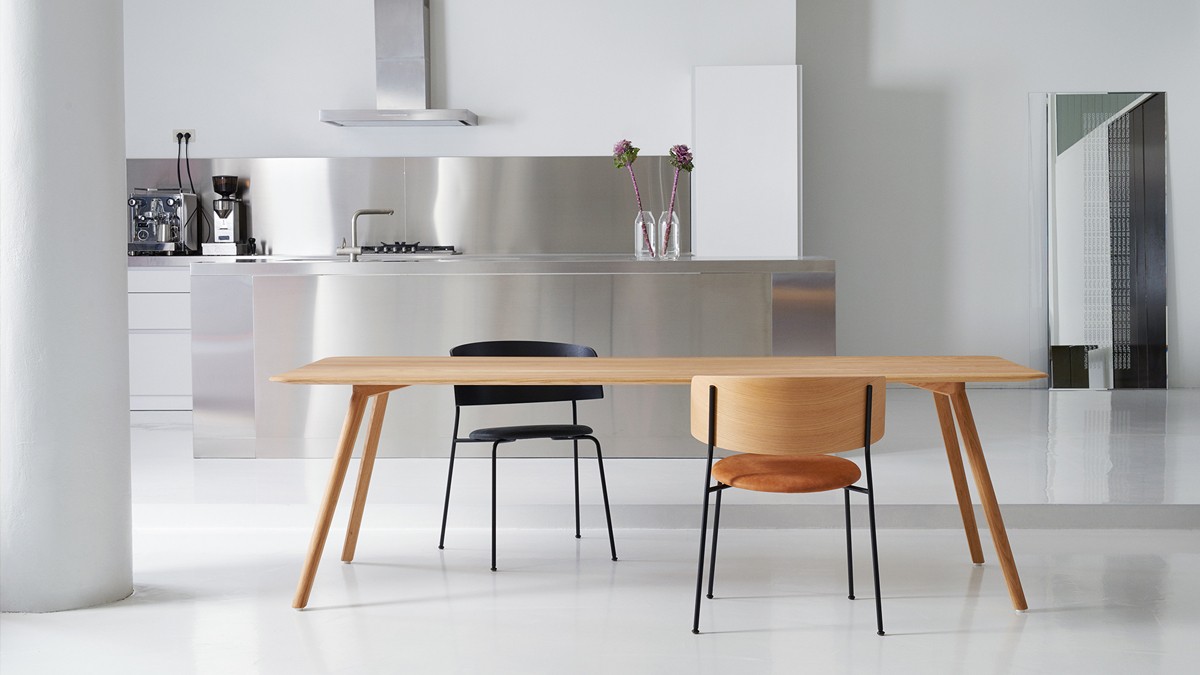
More Output, Less Commitment? AI in Interior Architecture
AI is increasingly making its way into architecture – not only in visualisation, but already in the design process itself. The shift is particularly evident at the intersection between interior design and traditional building planning, where working methods are rapidly evolving.
Architect Marten Herma Anderson, who works both independently and at the studio of Gisbert Pöppler, describes his use of AI image generators with a certain ambivalence: “I use them every day. And I say that with the same energy as someone admitting to drinking energy drinks every morning: it works, but you’re not entirely sure it’s good for you.”
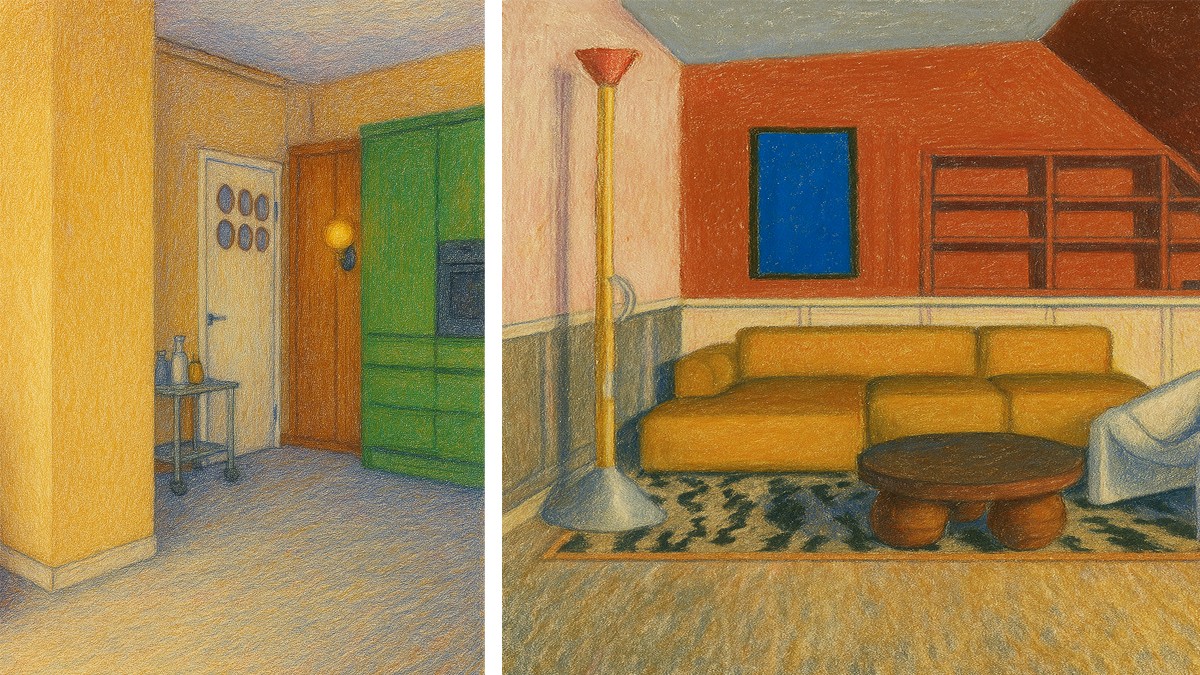
These are AI-generated visualisations by Marten Herma Anderson, kept deliberately abstract to allow room for interpretation in the design process.
What initially sounds like efficiency has direct consequences for communication with clients. Images, Anderson notes, are quickly read as promises: “Show someone a photorealistic rendering with perfect lighting, the perfect sofa and the perfect plant – and they’ll want exactly that.” The result is a new dynamic between clients and designers: concepts are produced more quickly, but are also questioned more readily and endlessly iterated. What once carried weight because it took time now loses a sense of commitment. In this context, Anderson speaks of a kind of “fast interior” – comparable to fast fashion: quickly available, visually compelling, but often lacking depth.
AI is accelerating this development. Spaces can now be generated in a matter of minutes – often with a visual quality that would previously have taken weeks to achieve. Whether these interiors actually work, whether the proportions are right, or whether they are truly liveable, often remains unclear at first. For designers, this creates a subtle but persistent pressure. Not because AI replaces their work, but because it shifts expectations: more output, faster, at any time. The time gained rarely flows into better concepts – instead, it is quickly absorbed into even more production. Anderson likens this feeling to a historical image: a weaver in the 18th century encountering a mechanical loom for the first time. Efficiency increases, production expands – but the crucial question remains: is this really the direction we want to take?
Between Tool and Reality
Despite all the scepticism, AI is here to stay and is becoming an integral part of how we live and work. In the world of interior design, it is accelerating processes, expanding possibilities and reshaping expectations – both for clients and designers. It can support, inspire and make access easier. At the same time, however, it puts at risk some of the very qualities that define good design: time, precision and a clear sense of intent. The key question, then, may be less about what AI is capable of, and more about how we choose to work with it. Because the easier it becomes to generate images, the more important it is to decide which ones should exist in the first place.
Autor
the thing Agency