-

- idd cologne inspiration
-
Articles
The Neo-Stone Age is Here
Marble at Home: From Grand Gestures to Subtle Details
A single marble piece is an easy way to introduce a touch of luxury into your home. Even better when it doesn’t feel overly heavy or imposing. Anyone who has ever worked with stone using a hammer and chisel knows just how weighty (and at times unpredictable) this ancient material can be. All the more compelling, then, are designs that embrace and reveal this craft-based dimension, making the process of working with stone an integral part of the furniture itself.
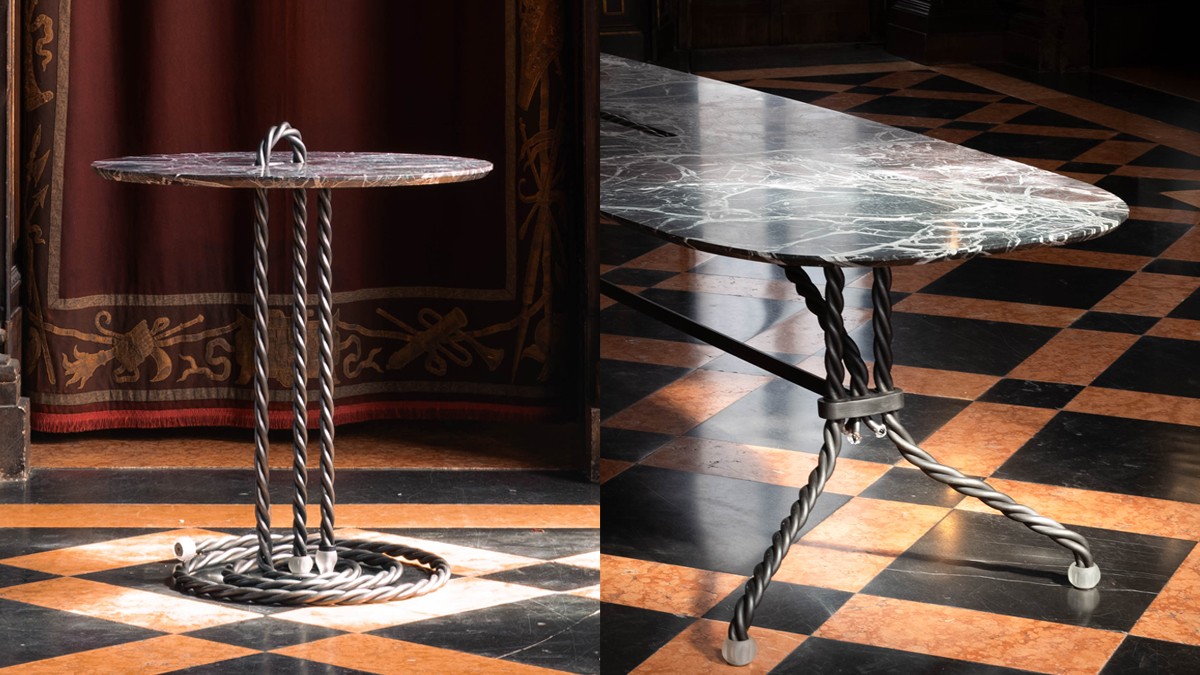
Neo-neo-baroque: The Side Table (left) and Brasserie Table (right) from Haydn von Werp’s “Tresse” series. Photos: Haydn von Werp.
The Tresse and Stemma collections by Milan-based American designer Haydn von Werp follow precisely this approach. Developed in collaboration with Italian and French craftspeople, the pieces combine the precision of contemporary design with traditional manufacturing techniques. The name „Tresse“ refers to weaving or braiding—in this case, braided steel whose forged appearance feels both raw and delicate. Neo-neo-baroque with a touch of historicism, the collection draws on a rich network of references, associations, and historical influences.
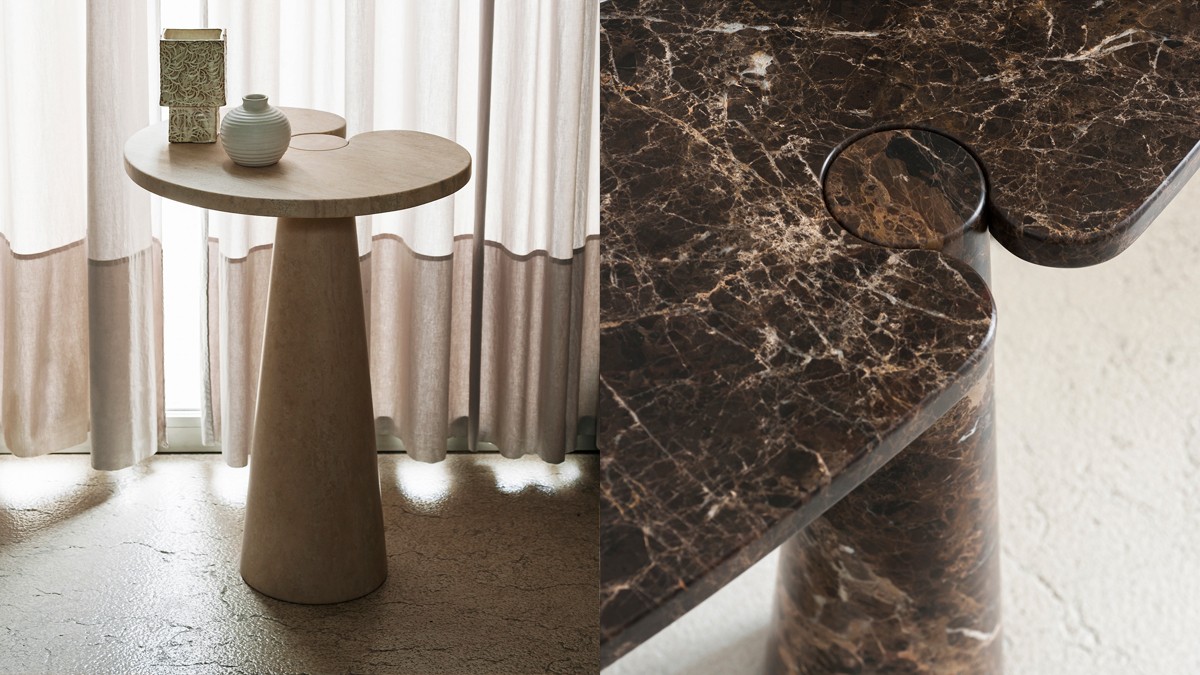
The “Eros” series, designed in 1971 by Italian designer Angelo Mangiarotti. Photos: Andrea Ferrari
One of the most beautiful qualities of natural stone is its ability to work both in detail and as a bold, architectural gesture. The “Eros” table series, designed in 1971 by Angelo Mangiarotti and produced by Agapecasa, is a perfect example of this idea.
The collection requires no screws or additional connectors. Instead, the heavy stone tops feature rounded recesses that simply rest on conical legs. This creates not only a stable construction, but also a striking surface detail where different grain patterns meet.
More than fifty years ago, the designer himself emphasised the material properties that make this construction possible: “Marble is rigid and heavy, and precisely these qualities allow for such a simple connection. It would be unthinkable to achieve this with materials that do not share the same properties.”
The Interplay of Elements: Marble Bathrooms
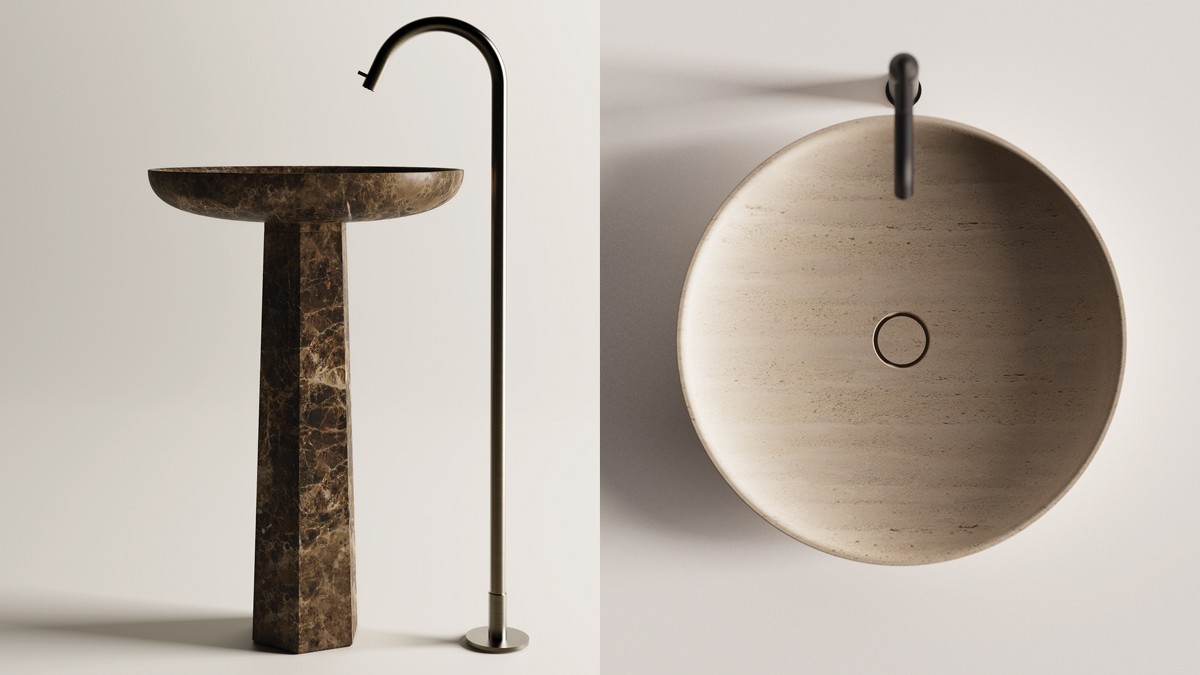
The “Sessenta“ series by Agape. Photos: Agape
In Daoist philosophy, the system of elements differs from many Western traditions: instead of four, it comprises five fundamental elements: wood, fire, earth, metal, and water. Earth (which also includes stone) stands for stability, balance, and permanence, while water symbolises movement, change, and the ability to adapt effortlessly to different conditions.
Earth and water therefore form an ideal pairing of stability and dynamism – a combination that can be translated directly into interior design. Marble, in particular, brings a sense of elegance to any bathroom setting. This is illustrated by designs from the Italian manufacturers Agape and Kreoo.
With their circular forms and natural veining, the washbasins resemble oversized tactile objects – calm, weighty, and yet surprisingly soft in their expression.
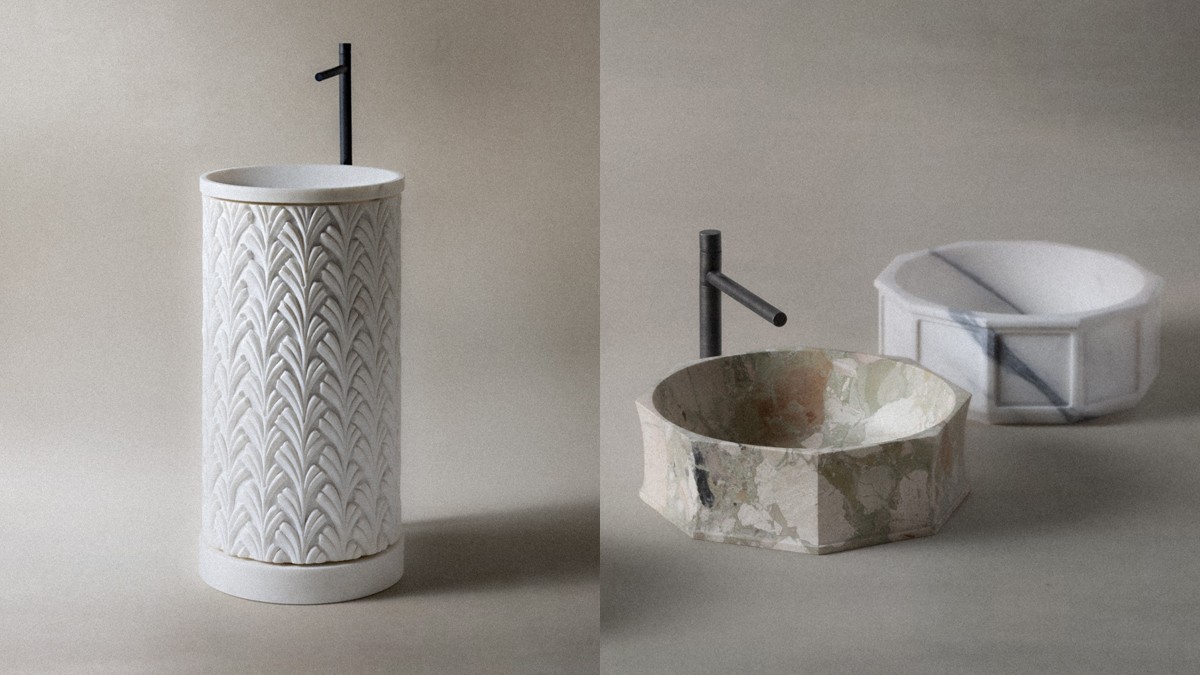
Left: “Palace” by Christophe Pillet for Kreoo. Right: the “Musina and Posso” washbasin series by Luca Nichetto for Kreoo. Photos: Kreoo.
Warmth and Connection: Marble as Lighting
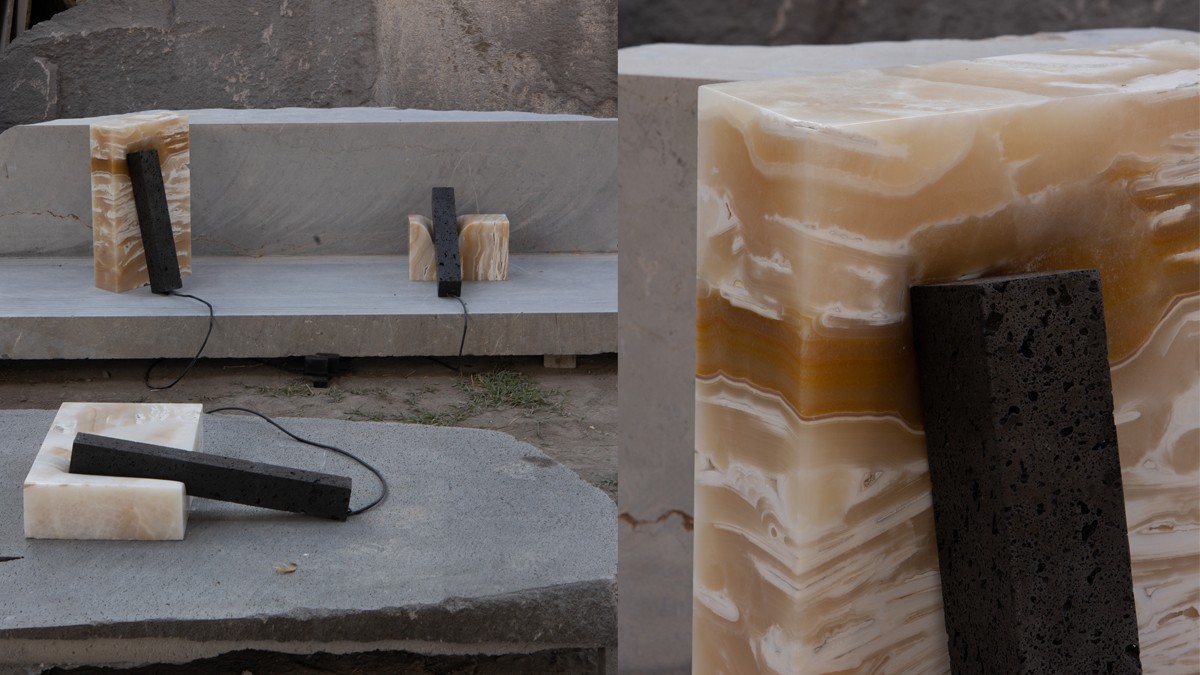
The “Viscoelastic Stone” lighting series by Studio Mut is the result of a collaboration with Mexican natural stone processor Mármoles Covarrubias. Photos: Samael Covarrubias
At first glance, light and natural stone may seem like an unusual combination—but together they bring a striking sense of warmth into interior spaces. The “Viscoelastic Stone” lighting series by Studio Mut, developed in collaboration with Mexican stone specialist Mármoles Covarrubias, explores exactly this tension. The designs combine onyx with porous volcanic stone, deliberately playing with our expectations of materiality. The heavy black stone appears to press down on the luminous onyx beneath it. This effect is amplified by the contrasting surfaces: smooth, translucent onyx with delicate veining meets the rough, matte, deep-black texture of volcanic rock.
Experimental Rock: Exploring Stone
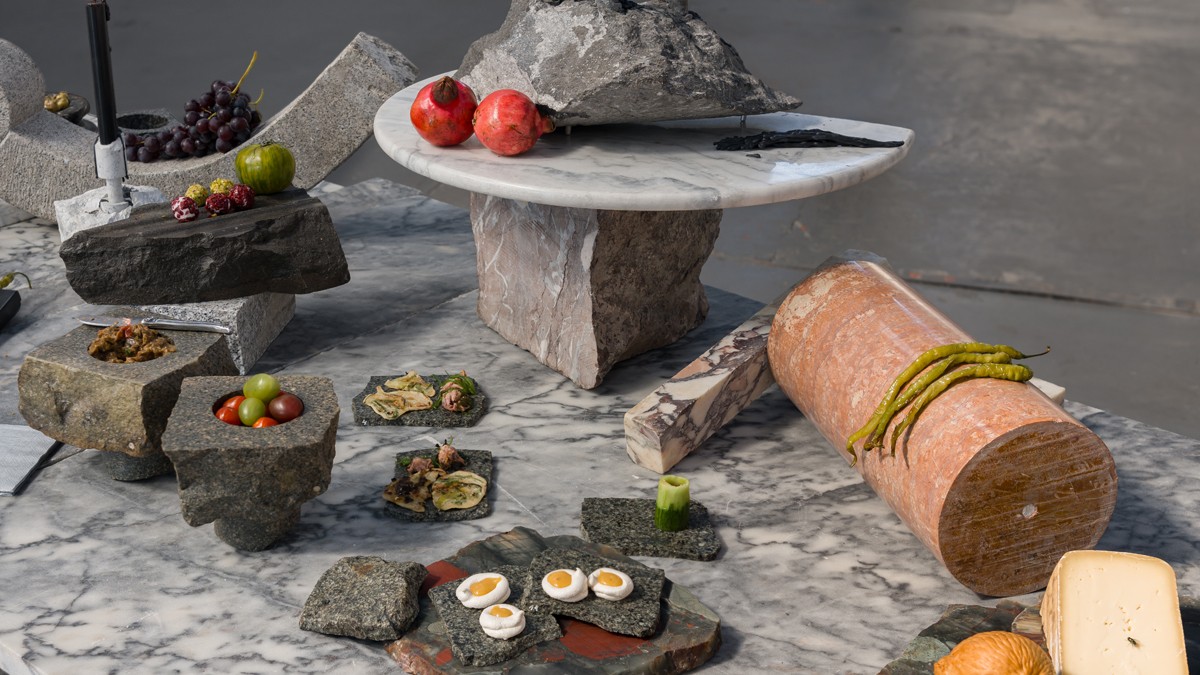
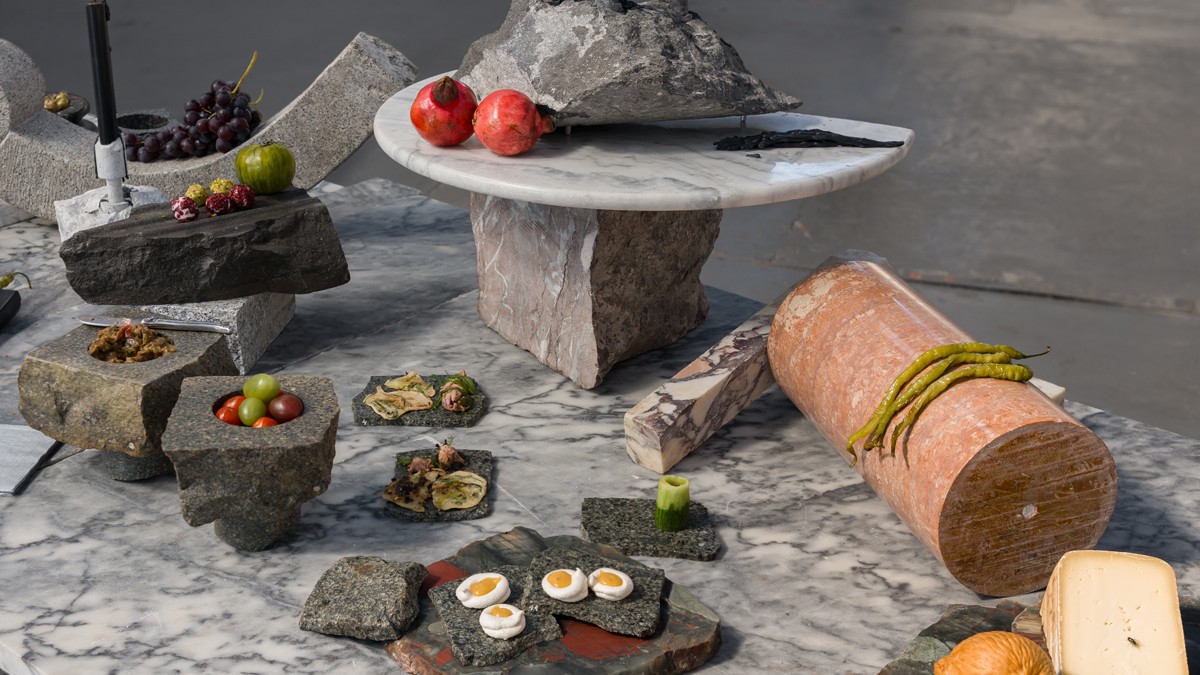
Food design on natural stone: a work by Antwerp-based Studio DO. Photo: Attila Boltresz
The Antwerp studio DO, founded by jewellery designer Dana Seachuga and artist Octave Vandeweghe, takes an experimental approach. Driven by a shared passion for stone carving, they explore the cultural and material significance of natural and precious stones. Rather than forcing stone into predetermined shapes, they develop installations that assign new functions to found materials. Design and craftsmanship are treated as equal partners in the process. This approach becomes tangible in a dinner concept designed by Studio DO and presented on natural stone. The result is not a conventional design object, but an immediate, sensory experience.
A similarly experimental approach can be found in the project “New Rocks” by Jules Péan. For this series, the Luxembourg-based designer collected industrial and mining waste from construction and extraction sites. From these materials, he created a modular furniture system that can be recombined in constantly changing configurations.
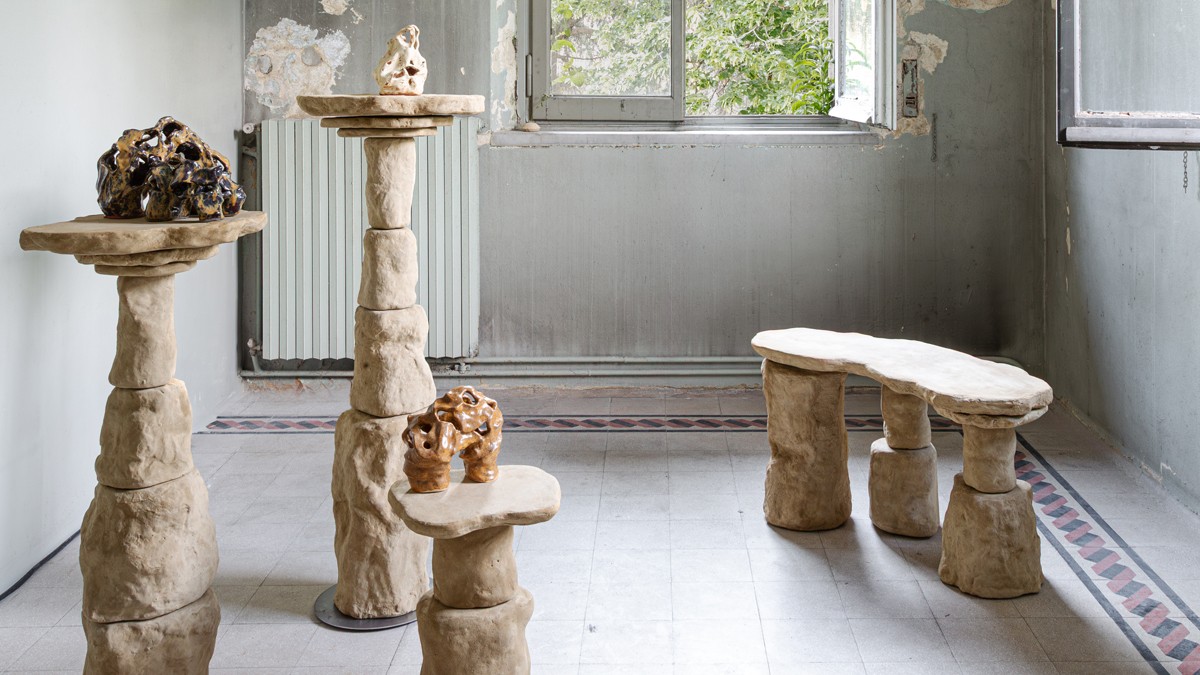
The “New Rocks” furniture series by Jules Péan is made from found industrial waste. Photo: Anwyn Howarth
Curious for more? Discover further explorations of fascinating materials in our idd cologne inspiration archive .
Author
the thing Agency